



What is Myrrh?
Myrrh is a natural gum resin derived from trees of the Commiphora genus, most notably Commiphora myrrha, which originates from parts of Arabia, Somalia, and Ethiopia.
The resin is produced by tapping the tree. Small incisions are made in the bark, allowing a thick sap to emerge. This sap forms into teardrop-shaped droplets, which are left to harden into bead-like nuggets before being collected. These resin tears may then be processed further, including steam distillation to produce Myrrh essential oil.
These trees grow in some of the harshest environments; dry, rocky landscapes where survival feels improbable. Much like Frankincense, Myrrh has long been associated with protection, preservation, and healing.
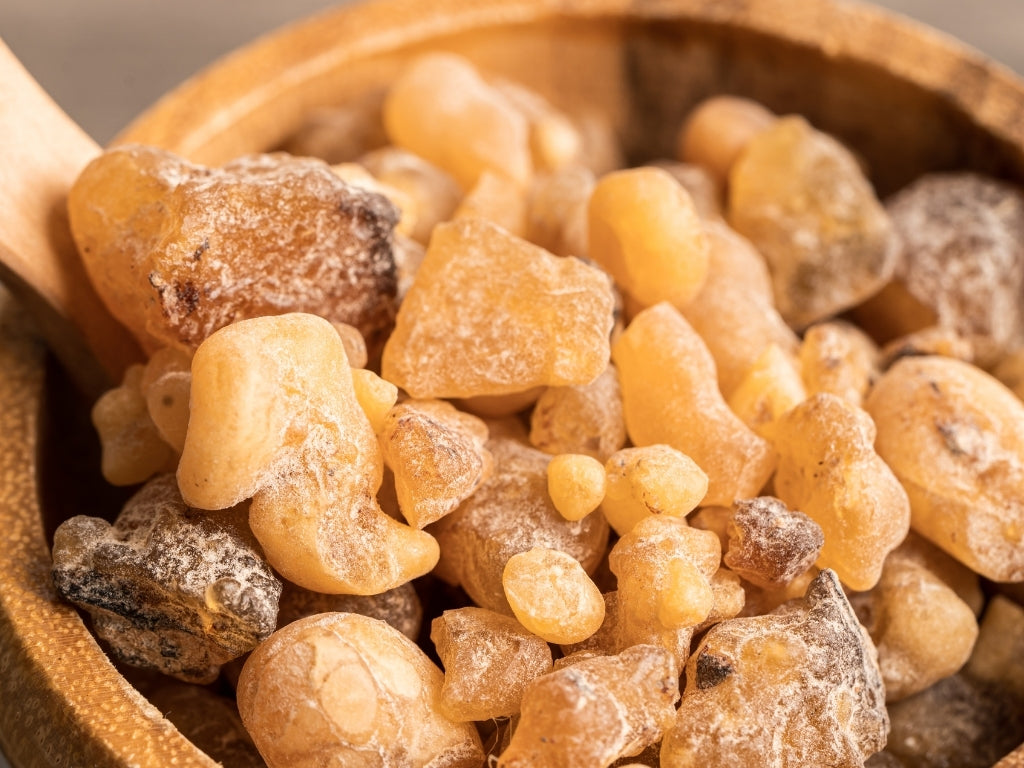
Myrrh typically appears as small, irregular chunks or hardened resin tears, darker and denser than frankincense.
These range in colour from deep amber to reddish-brown, often with a matte, slightly opaque surface. Compared to Frankincense, Myrrh is less translucent and more brittle.

Myrrh is one of the rare materials that has persisted throughout the years. Across centuries and continents, it has remained relevant and adapted to each culture it touches.
Its uses include:
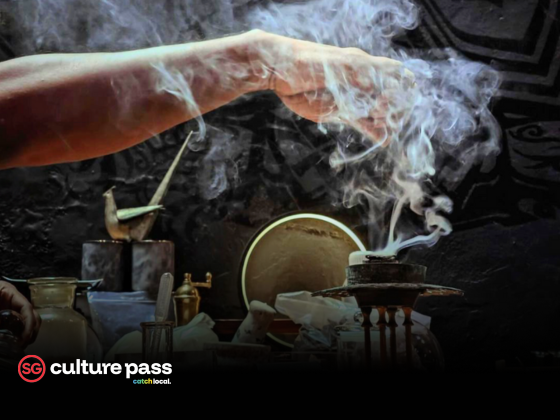
- Being burned for rituals
- Blended into oils and perfumes
- Used in healing practices
- Shared in homes and places of gathering
Medicinal and Everyday Uses
These include:
- Antimicrobial and antiseptic properties
- Support for wound healing and inflammatory conditions
- Traditionally used for oral health and digestion
- Known for calming and grounding effects
- Supports the body’s natural healing response
- Helps relieve gas and bloating
- Supports the body in clearing mucus from the lungs
- Traditionally used in practices relating to circulation and hormonal balance
- Traditionally used to help the body deal with intestinal parasites
- Grounded into powder for remedies
- Burned to repel insects and pests
- Used as a natural ink in Islamic schools
- Applied in medicinal preparations
Myrrh in Perfumery
It appears in:
- Amber and oriental compositions
- Incense-led fragrances
- Modern niche perfumery
A Shared Language of Ritual Across Cultures
These include:
- In Christian traditions, where it is associated with anointing and sacred use
- In the Bible, where it is said to have been mixed with wine and offered as a form of pain relief
- In parts of the Middle East and Africa, where it is used in incense and healing practices
- In many households, where it is burned to create a sense of calm and grounding
The most well known instance of Myrrh is its presence alongside frankincense in the story of the Three Wise Men, presented as a gift to the baby Jesus; cementing its place within narratives of reverence and meaning.
From Trade Routes to Everyday Life
Myrrh was once a highly valued material, traded across regions alongside frankincense.
Its movement was made possible by the domestication of camels, allowing traders to transport it across desert routes, later known as the Incense Route. These networks connected the Arabian Peninsula to surrounding regions and beyond.
What began as a rare and precious trade material gradually became something more familiar; a presence in homes, rituals, and everyday life.
How It’s Harvested
- The bark of the tree is carefully cut
- A thick resin seeps out
- It hardens into resin “tears”
- These are collected over time

Myrrh in Singapore
While harvested far from home, Myrrh continues to play a role that is both practical and cultural.
In Singapore and across Southeast Asia:
- It is often used in blended incense
- Burned to create a grounding, calming atmosphere
- Found in homes, mosques, and temples
Like Frankincense, it becomes part of everyday rhythms, quietly woven into daily life.
A Material at Risk
Rising demand has led to:
- Overharvesting
- Reduced regeneration of trees
- Declining resin quality
This mirrors the pressures seen in other natural materials such as Frankincense and Agarwood (oud).
Sustainable harvesting practices are essential; not just to preserve the trees, but to ensure that this material continues to exist for future generations.
Myrrh is not tied to a single culture, religion, or era.
It is a material that has:
- Crossed deserts and regions
- Moved between sacred and everyday spaces
- Been carried through generations without losing its relevance
Sources & Further Reading
- Encyclopaedia Britannica – Myrrh
- https://www.britannica.com/plant/myrrh
- National Center for Biotechnology Information (NCBI)
- https://www.ncbi.nlm.nih.gov/pmc/articles/PMC5452224/
- Royal Botanic Gardens, Kew
- https://powo.science.kew.org/
- Smithsonian Magazine
- https://www.smithsonianmag.com/